
Leg Slimming Pilates Butt and Thigh Workout to Lift Glutes & Tone Thighs
Lia Bartha likes this move to work the quads and hip flexors. The information provided on this website (including the Blogs, Community pages, Program Materials and all other content) was originally intended for a U.S. audience. If you watch a Pilates video or take a class, you’ll often hear instructors talk about keeping your spine “neutral.” This means relaxed and straight — neither concave nor convex. A neutral spine lowers your risk of strain or pain and improves efficacy. If you can’t make it to a class, online instructional videos can help too. Try our 10-minute Pilates core blaster or this 20-minute Pilates workout for any level.
Double Leg Lifts
Regarding the pelvis, a neutral position maintains the lumbar curvature of the lower back without overarching the back or the feeling of gripping in the hip flexors. The hip bones (anterior superior iliac crest) and pubic bone should be level. Your powerhouse comprises the muscles surrounding your trunk, including those of your lower back, hips, pelvic floor, and abdominal area. The barrier to entry is also relatively low for beginners, as you can get started with little to no equipment. So to help ease you into your Pilates practice, we asked experts to share their knowledge, including tips on how to do 12 beginner-friendly exercises at home.
Double Leg Lift
Throughout the exercise, keep all of your muscles engaged. Imagine you’re lifting your rib cage away from your hips, creating more space, and getting taller. Watch out for just pressing up into the position using only your arms and compressing your lower back.
To get the most out of these exercises, aim to work at a slow to moderate pace. Strive for control and refrain from holding your breath. Keep your abdominals lifted in and up, and stop if your abdominals pop outward or dome inward when you lift your knees.
How to Do a Straight Leg Pull
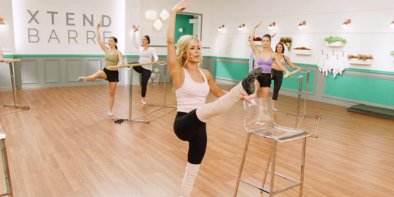
Pilates emphasizes controlled, precise harnafit reviews movements, and often uses your body weight or light resistance to build muscle endurance and strength. Unlike traditional strength training, which can bulk muscles, Pilates focuses on creating long, lean muscles through stretching and toning. When doing bodyweight leg work, it’s important to incorporate both hinge variations, like good mornings and glute bridges, and squat variations, like squats and lunges.
If you’re new to Pilates, Ross recommends first mastering the form an exercise first. “Then add the circle when you’re ready to level up!” The Pilates ring can also be used for support during certain exercises and to deepen stretches (when used like you would a strap). If you’re looking for affordable, portable and highly effective exercise equipment to add to your home gym, look no further.
Leg lifts
Usually done at the beginning of the class to get your heart rate going, The Hundred helps you to focus and control your breathing, and warming up your entire body. It will challenge your hips and flexibility while building on your range of motion and mobility. You don’t need fancy equipment to get started with pilates. Mat pilates requires just your bodyweight and a pilates or yoga mat to cushion your spine, which makes it easy to do at home. As you progress, you may wish to add resistance bands, a pilates ball or light hand weights to increase the intensity. I recommend beginners start with 2-3 pilates sessions a week.
The Best Pilates Exercises for Your Legs
Training your legs twice a week (for example, on Monday and Thursday) gives your body the perfect window to recover and adapt before the next session. Spacing out your leg workouts allows you to maintain consistency without risking injury or burnout, setting you up for long-term success. When you perform a Pilates leg workout, you create microscopic tears in your muscle fibers. The recovery process, which typically takes hours, is when your muscles repair and grow stronger.
Training 4 times per week provides a good balance between stimulating your muscles and allowing them adequate time to recover and rebuild. This schedule will enable you to create a routine that hits all major muscle groups multiple times without leading to overtraining (10). Joseph Pilates recommended performing his exercises 4 times a week for optimal results (9). This frequency aligns with modern strength training principles, which suggest that consistency is crucial for seeing progress. Here is an 8-exercise mat Pilates leg workout program.
Seal exercises the abdominals to help with trunk stabilization and spinal control/massage. Only move the leg so far forward or back as you can without moving the pelvis or crunching the lower back. Torso should remain still and stable throughout the exercise. Avoid rolling onto the neck, keeping head and neck long and released on the Mat. You should be able to execute the Roll Over prior to attempting the Jack Knife.
How to Do Pilates: 12 Exercises for Beginners

But in general people sometimes struggle to work their smaller muscles. And one smaller but super important lower-body muscle is the gluteus medius. For a comprehensive training plan, check out this complete Pilates leg workout.
Warrior Balance
- The chin slightly tucks in, and the back of the neck lengthens.
- Lower your right leg to the mat and bend your left knee to a 90-degree angle.
- This beginner-friendly move may enhance your fitness routine by strengthening your core, glutes, and hamstrings.
- You can do this workout with cardio, or you can add it to the end of a lower body strength training workout to really burnout those muscles.
- Pilates is a type of workout developed by Joseph Pilates, a German physical therapist and gymnast, in the early 1900s as a way of helping people recover from injuries.
- Of course, you can extend this time as you get stronger and progress.
This is a challenging exercise when done correctly. Place the palms of your hands on your hip bones to feel if you shift your weight or pop your abdominals out. When your legs are in tabletop, your hips and knees are bent at 90 degrees, with your feet off of the floor.
Support weight goals
The light-weight, high-volume style of lifting found in pilates workouts is especially effective at targeting the smaller stabilizing muscles in the core, thighs and shoulders. I also think pilates is one of the most effective abs workouts you can do, because it focuses on building core stability from all angles. Bodyweight leg exercises are also valuable for learning proper form before you add weights to certain moves.
A 31-Day Walking and Strength Plan to Help You Get Moving This Year
This content is for informational and educational purposes only and does not constitute individualized advice. It is not intended to replace professional medical evaluation, diagnosis, or treatment. Seek the advice of your physician for questions you may have regarding your health or a medical condition. If you are having a medical emergency, call your physician or 911 immediately.